Hey folks, let’s cut to the chase—if you’ve ever stood in a garage during a brutal New England winter, sweating through a summer project, or just staring at your beat-up metal garage door that’s already rusting at the corners, you’ve probably asked the same question I get all the time: Can PVC doors actually work for garages? As a PVC door supplier who’s been in this game for nearly a decade, I’ve fielded this query so often, I could write it on every sample sheet. And spoiler alert: it’s not a one-size-fits-all answer, but more often than you think, the answer is a resounding yes. Let me break this down without the jargon, because I know you just want the real stuff, no marketing fluff. PVC Door
First off, let’s start with the basics people usually gloss over: what even makes a good garage door material, anyway? Garages are harsh environments, let’s be real. Not like your living room where you control the temperature and leave your doors closed 24/7. Garages deal with extreme swings—think -10°F in January up to 95°F+ in July here in the Midwest. They get exposed to moisture from car washes, rain seeping in through cracked walls, even random spills from paint cans or motor oil. They take impacts from random tools falling, bikes crashing, or that time your teen tried to park the pickup too close and dented the old door panel. And let’s not forget constant use—your garage door is opening and closing hundreds of times a year, way more than a interior bedroom door.
So how does PVC stack up against the usual suspects? Wood, steel, aluminum—those are the big three, right? Let’s talk steel first, since it’s the most common garage door material. Steel’s durable, yeah, but it’s a giant conductor. That means in winter, it turns your garage into a icebox—cold seeps through it like it’s a screen. In summer, it traps heat so bad your AC unit has to work overtime just to keep the adjacent living room cool. Plus, steel rusts. Even the “weather-resistant” kinds? Leave a small scratch on the paint, and within a year you’ve got rust creeping through, looking like moldy bread. I’ve had customers come in with steel doors that rusted so bad the whole panel had to be replaced in 3 years. Not a great investment.
Wood is another one. It looks nice, adds that rustic charm—until it warps. Hot, humid summers? Wood swells. Cold, dry winters? It shrinks. Before you know it, your door doesn’t close right, gaps form, and that same gap lets pests in, moisture seeps through, and before long you’ve got rotting edges. It also needs constant maintenance—staining every 2-3 years, repainting, fixing warps. Who has time for that? Most of my customers are busy—they don’t want to be on a ladder every weekend fixing a garage door.
Aluminum is lighter than steel, but it’s just as prone to dents, and it’s not much better at insulation. Also, it’s super flimsy—kick it once too hard, and you’ve got a hole. Not ideal if your garage doubles as a tool storage shed, which most people’s do.
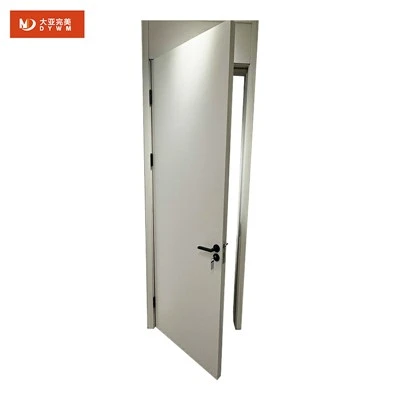
Now, PVC. Let’s get real about what PVC garage doors actually are—they’re not the thin, cheap plastic sheets you used as a kid’s fort. The ones we make at our shop are high-quality, cellular PVC—think rigid, foam-core PVC that’s dense, not flimsy. That’s the key difference. So let’s break down the perks that matter for garages:
First, insulation. Cellular PVC has tiny air bubbles trapped in the core, same as a good styrofoam cooler. That’s a huge deal for garages. If your garage is attached to your house, a well-insulated garage door cuts your energy bills—studies show attached garages can add 5-10% to your home’s heating and cooling costs if the door is a bad insulator. PVC’s R-value (that’s the insulation rating, higher = better) is way better than steel or aluminum. Most of our PVC garage doors have an R-value of 12 to 18, while a basic steel door is usually around 4 or 5. That means in winter, your garage stays 10-15 degrees warmer than with a steel door, and in summer, it stays cooler. No more standing in a sweaty garage while you fix your bike, no more icy handles when you grab your tools in December.
Next, moisture and rot resistance. Here’s where PVC blows wood out of the water. Garages get way more moisture than most people realize—if you park your car outside and it rains, water drips off the hood onto the door. If you wash your car in the garage, water splashes everywhere. If you live in a humid area like the Southeast, condensation builds up on walls and doors all summer. Wood absorbs that moisture, swells, rots. Steel and aluminum don’t rot, but they rust and corrode from moisture. PVC? It doesn’t absorb water at all. We’ve had customers who installed our PVC doors 7 years ago in Florida, and they still look brand new—no warping, no discoloration, no soft spots from water. I’ve even had customers who keep their garage door open during rainstorms (don’t do that, but it happens) and the PVC door doesn’t get damaged. That’s a game-changer.
Durability against impacts. Like I said, garages are rough. You’re carrying a 10lb drill through the door, bikes tip over, kids ride scooters into it. Our PVC garage doors are impact-resistant—they can take a hit from a baseball bat, a falling garden tool, even a minor fender bender (we don’t recommend the fender bender, but let’s be real, it happens). Unlike wood, which cracks, or steel, which dents permanently, PVC just bounces back. We’ve had a customer who had a bike crash into his PVC door, and the only mark was a tiny scuff that he rubbed off with a dry cloth. That’s the kind of durability you want for a high-traffic garage.
Low maintenance. This is the big one that sells most people. With steel, you have to touch up paint if it scratches. With wood, you have to stain and seal every few years. With PVC? Wipe it down with a damp cloth and a little soap once a year, that’s it. No sanding, no repainting, no replacing rotted edges. Our PVC doors also come with a UV-stabilized finish, so they don’t fade in the sun. If you have a detached garage, which gets more sun than an attached one, that’s huge. No more looking at a garage door that’s turned from white to gray after 2 years in the sun.
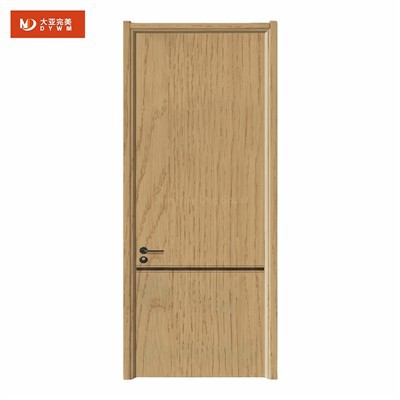
Wait, but hold on—this isn’t to say PVC is perfect, right? I’m a supplier, not a sales robot, so I’ll be honest with the downsides, because you deserve the full picture. First, PVC is a plastic, so some people worry it looks cheap. But that’s only if you buy the super thin, low-quality PVC doors. The ones we make are thick, molded with a smooth, uniform finish that looks just like a painted wood door. We can even do wood grain textures, so it looks like real wood without the maintenance. Also, PVC is more expensive upfront than a basic steel door. But when you add up the maintenance costs, energy savings, and durability, it works out to cheaper over 10 years. A steel door might cost $800 now, but you’ll spend $200 every 3 years repainting, and it might need replacement in 15 years. A PVC door is $1,200 now, no maintenance, and it’ll last 25 years or more. Math checks out.
Another downside? If you live in an area with extreme, extreme cold—like -30°F for weeks on end—some PVC can get brittle. Wait, but our PVC is formulated to handle temperatures down to -40°F, so that’s not a problem for most places. The only time you’d have an issue is if you’re in a super remote area with temperatures that low and not a lot of sun, but even then, it’s way less brittle than old PVC products. Also, PVC doors aren’t as easy to repair if you do get a dent—unlike steel, where you can pop a dent out, PVC’s impact resistance means dents are rare, but if you do get a deep scratch, you can sand it and repaint it, same as wood.
Now, let’s talk about what types of garages are best for PVC doors. If you have an attached garage, especially if you use it as a workshop, a gym, or just spend a lot of time there, PVC is perfect because of the insulation. If you have a detached garage in a humid area, PVC is way better than wood because it won’t rot. If you have a garage that gets a lot of use—like a family that uses the garage for storage, kids’ activities, car repairs—PVC holds up way longer than other materials.
I’ve seen so many customers switch from steel to PVC and never go back. Last year, a customer from Ohio came in with a steel door that had rust so bad he had to replace the whole panel after 2 years. He installed our PVC door, and a year later he told me his energy bill went down $120 a month because the garage stayed warmer. Another customer, a mom from Atlanta, had a wooden door that warped so bad her garage door wouldn’t close in summer. She got a PVC door, and now she just wipes it down once a month—no more patching gaps or letting pests in.
Wait, but let’s clear up a common myth: some people think PVC doors are flimsy and won’t hold up to a garage door opener. No, not the right kind. Our PVC garage doors are reinforced with steel rails and hardware, same as steel doors, so they work with every standard opener. Whether you have a chain drive, belt drive, screw drive, it’ll fit just fine. We make them in all standard sizes—single car, double car, even large RV garages—so you don’t have to worry about custom fitting.
Another thing: if you’re worried about security, PVC isn’t a weak point. The high-density PVC core is hard to break into, and we add reinforced locking hardware, same as steel doors. So your garage is just as secure with a PVC door as any other.
So, should you get a PVC door for your garage? For most people, yes. The only exceptions are if you’re on a super tight budget and need the cheapest door possible right now (even then, you’ll save money in the long run), or if you live in a place with temperatures below -30°F and no sun (rare, but possible). For everyone else, PVC solves so many of the problems with traditional garage doors—insulation, maintenance, moisture damage, durability.
At the end of the day, your garage is one of the most used spaces in your home, even if you don’t think of it that way. It’s where you keep your car, your tools, your family’s bikes. It’s where you work on projects in the weekends. You want a door that works as hard as you do, without the hassle. That’s what PVC doors do. They’re not just a plastic sheet—they’re a long-lasting, low-maintenance, energy-efficient solution that fits almost every garage.
If you’re tired of dealing with rust, warping, high energy bills, or constant repairs, reach out to us. We can walk you through different styles, sizes, and options that fit your budget and your garage. No pushy sales pitches, no confusing jargon—just straight talk about what works for your space. Don’t keep putting up with a garage door that’s more trouble than it’s worth.
Wall Panel References:
- U.S. Department of Energy. (2022). Garage Door Insulation and Energy Efficiency.
- National Association of Home Builders. (2021). Material Durability for Residential Garage Doors.
- PVC Industry Association. (2020). Cellular PVC Applications in Residential Building Products.
- Journal of Construction and Building Materials. (2019). Performance of Rigid PVC Exterior Building Components in Humid Climates.
One May Dee Show Furniture Co., Ltd.
As one of the most professional pvc door manufacturers and suppliers in China, we’re featured by quality products and good price. Please rest assured to wholesale cheap pvc door made in China here and get quotation from our factory. Customized orders are welcome.
Address: Laomiao Village, Dacheng Town, Sanyuan County, Xianyang City, Shaanxi Province, China.
E-mail: trade@omdoor.com
WebSite: https://www.omdoor.com/
