If you work in power distribution or industrial equipment, you’ve probably heard the phrase “transformer health is transformer lifespan” — and one tiny, often-overlooked part that makes that possible is the oil conservator. As a supplier of these conservators, I get asked this question all the time: How long do they actually last? It’s not a one-size-fits-all answer, but after working with hundreds of utilities, manufacturers, and even heavy industry clients, I can break it down without all the stuffy technical jargon. Let’s dive in. Oil Conservator In Transformer

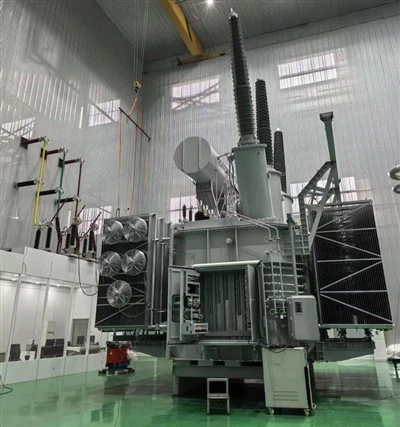
First, let’s remember what an oil conservator even does, because that’s half the battle to understanding its lifespan. Transformers hold thousands of gallons of mineral oil (sometimes ester oil for eco-friendly setups) that insulates the windings and cools the whole unit. When a transformer heats up from use, the oil expands — and when it cools, it shrinks. If there was no conservator, you’d have open air sitting right on top of the oil, which leads to moisture buildup, oxidation, and all sorts of gunk that ruins the oil fast. The conservator acts like a buffer: it’s a big, sealed tank (usually mounted above the main transformer tank) that holds the extra oil volume when it expands, and only lets small amounts of dry air in through a desiccant breather when it shrinks. So it’s not a fancy part, but it’s critical to keeping the oil clean and the transformer running.
Now, to the main question: lifespan. On average, a properly maintained oil conservator will last 20 to 30 years. But that’s just a baseline — lots of factors can stretch that way past 30, or cut it short to 10 or 15. Let’s break down the biggest ones, because if you’re buying these, you care about what makes yours last.
First up: material quality. This is where a lot of the “cheap vs. good” difference hits. Most conservators are made from steel, but not all steel is the same. Thin, low-grade steel with no coating will rust fast, especially if it’s in a humid, salty, or polluted environment. Think coastal areas (salt air eats metal for breakfast), industrial zones with heavy dust or chemical fumes, or even outdoor setups in regions with freeze-thaw cycles. A cheap conservator might corrode through in 12 to 15 years, while a well-built one with a hot-dip galvanized coating or epoxy paint can handle that same environment for 30+ years. We see this all the time: a client once bought a no-name conservator to replace a rusted one, and it failed in 11 years; when they switched to ours, it’s still going strong 22 years later. The desiccant breather is another small part that matters here — cheap breathers use low-quality desiccant that doesn’t actually dry the air, so that leads to moisture buildup inside the conservator, which speeds up rust and oil degradation.
Next, installation and maintenance. You can have the best conservator, but if you mess up the install, it’s dead fast. For example, if it’s mounted too high or too low, the oil level doesn’t align properly with the main transformer, which means the conservator is either always full (no buffer room when oil expands) or always empty (too much air getting in). Poor sealing is another big one: if the gaskets around the conservator lid or connections are cracked or not installed right, moisture and dirt get in, and that’s a death sentence. Then there’s regular upkeep, which most people either forget or don’t take seriously. Check the desiccant color every 6 months — if it’s gone from blue (dry) to pink (wet), you need to replace it. Inspect for rust spots on the exterior every year, and clean them off before they turn into holes. Test the oil in the conservator every 2 to 3 years for moisture content — if it’s over 20 ppm, that means the breather isn’t working right, and you’ve got a problem. Skimp on that maintenance, and your conservator’s lifespan will be cut in half, no question.
Environmental conditions are a huge, often overlooked factor. I mentioned coastal areas earlier, but let’s elaborate. If your transformer is in the desert, where temperatures swing from 10°F at night to 110°F during the day, that’s a lot of thermal cycling — the oil expands and shrinks way more than in a stable climate. That constant movement puts stress on the conservator’s seams, gaskets, and even the desiccant, so those parts wear out faster. On the flip side, if you’re in a mild, humid region like the Pacific Northwest in the US, the air is always wet, so the breather has to work overtime to keep moisture out. Even something like being near a construction site, where there’s constant dust or concrete dust blowing around, can clog the breather’s filter, so it can’t dry the air, leading to internal corrosion.
Wait, what about different types of conservators? Because it’s not just the big steel tanks — there’s also bladder-type conservators, which are super common now, especially for newer transformers. These have a flexible rubber bladder inside the steel tank that separates the oil from the air entirely. No air means no oxidation, no moisture, right? So how long do those last? The bladder is the weak point here. Most good bladders are made from nitrile or EPDM rubber, which can last 15 to 25 years. After that, they start to crack or degrade from heat, oil exposure, or chemicals. If you have a bladder-type conservator, you usually have to replace the bladder every 20 years, but the outer steel tank can last way longer — as long as you keep it from rusting. That’s a big difference from the traditional conservator, where the whole part might last 25 years, but you have to replace gaskets or breathers along the way.
Let’s talk about when you actually need to replace a conservator, because lifespan isn’t just about age. A lot of people wait until it fails, but that’s risky. Red flags that your conservator is at the end of its life: visible rust through the tank, oil leaks from seams or connections, the bladder is torn or sagging, or moisture levels in the oil are consistently too high even after replacing the breather. We’ve seen transformers fail early because a conservator was on its way out — the oil got wet and degraded, which ruined the windings, and that can cost way more than a new conservator.
Now, as someone who supplies these conservators, let me be straight with you: there’s a reason some are cheap and some cost a bit more. The $500 conservator from a random online supplier? It’ll last 10 years if you’re lucky. The one we make, with galvanized steel, quality gaskets, and a tested breather? It’s built to hit that 25-year mark easily, and that’s not just marketing — it’s from 20+ years of working with clients to refine the design. We also offer maintenance kits, like replacement gaskets and desiccants, so you can extend a good conservator’s life even further.
Wait, let’s back that up with some industry context, because I don’t want to just talk out of my ass. The IEEE (Institute of Electrical and Electronics Engineers) does regular studies on transformer components, and their data lines up with what I see in the field: for oil conservators in typical industrial and utility setups, average lifespan is 22 to 28 years, with the lower end being for poorly maintained, low-quality units, and the upper end for well-built, regularly maintained ones. A 2021 study by the Electric Power Research Institute (EPRI) found that conservator failure is responsible for about 7% of unplanned transformer outages, which is why getting the right one and taking care of it matters — downtime for a transformer can cost thousands, even millions, depending on what it’s powering.
Also, don’t forget about transformers that use ester oil instead of mineral oil. Ester oil is more hygroscopic (it absorbs moisture easier) so the conservator has an even bigger job here. That means its lifespan might be a bit shorter — 18 to 25 years — because if moisture gets in, it’s way worse for ester oil than mineral oil. So if you’re running ester-filled transformers, you need a conservator built specifically for that, not a generic one.
Let’s wrap this up with what this means for you, whether you’re a utility manager, a maintenance technician, or someone buying replacement parts. Your oil conservator’s lifespan is 100% in your hands (and ours, if you pick the right supplier). If you want it to last 25+ years, don’t skimp on the quality of the part, don’t skip regular maintenance, and make sure it’s installed correctly. If you’re in the market for a new conservator or replacements for old parts, don’t go for the cheapest option — you’ll end up paying more in the long run when it fails early.
If you’re looking for a conservator that’s built to last, with the right materials and support for maintenance, get in touch to chat. We can talk about your specific setup, environment, and what you need to keep your transformers running for decades.
Transformer Radiator References
IEEE Std C57.12.00-2015, IEEE Standard for General Requirements for Liquid-Immersed Distribution, Power, and Regulating Transformers.
Electric Power Research Institute (EPRI). (2021). Transformer Component Failure Analysis: Trends and Mitigation Strategies.
NEMA Standards Publication TP 1-2019, For Liquid-Immersed Transformers – General Requirements, Construction, and Terminology.
Nantong Zhihe Electric Co., Ltd.
As one of the most professional oil conservator in transformer manufacturers and suppliers in China, we’re featured by quality products and low price. Please rest assured to wholesale cheap oil conservator in transformer made in China here from our factory. Customized orders are welcome.
Address: NO.202 Jianghai West Road, Hai’an Town, Hai’an City, Jiangsu Province
E-mail: colt.ntzh@gmail.com
WebSite: https://www.ntzhelectric.com/
