Hey there, let’s cut to the chase—if you’re reading this, you probably have an old industrial cable tray system that’s giving you grief. Maybe it’s sagging under the weight of new data cables, corroded from years of factory humidity, or just plain inefficient compared to what’s out now. And if you’re an industrial cable tray supplier, let’s be real: upgrading these isn’t just about selling a new tray—it’s about solving the headaches your clients have lived with for decades. I’ve been in this game for years, worked with so many plant managers who’ve tried band-aid fixes (hello, random zip ties and rusty brackets) that backfired big time. Let’s break this down like we’re chatting in your break room, no stuffy jargon, just real steps that work. Industrial Cable Tray
First, let’s get why you can’t just slap a new tray on old supports. I’ve seen this mistake way too often: a plant manager replaces their 10-year-old steel tray with a fancy aluminum one, but the original wooden beams and rusted hangers can’t hold the extra weight. One client of mine had their tray collapse during a night shift, taking out half their manufacturing line—cost them over $200k in downtime. So step one? Do a full audit before touching anything. What does that audit actually look like? Grab a notebook, a tape measure, a moisture meter, and a weight scale (or a cable tag sheet if you have it). Walk every inch of your existing system. Note where the corrosion is—steel trays in coastal plants turn to swiss cheese fast, right? Check span lengths: old trays often had spans of 8 feet, but modern high-strength trays can go 10 feet, which cuts down on hanger costs. Most importantly, count all the cables that are there now and the ones you’re adding—like 10G Ethernet, sensor cables, power lines for new robotics. I once had a plant tell me “we just need a little extra space” and turned out they were adding 50 more 4-pair cables for a new automation system—their old tray was packed at 90% capacity, way over the 60% sweet spot for proper airflow. That audit is non-negotiable. Skip it, and you’re wasting time and money.
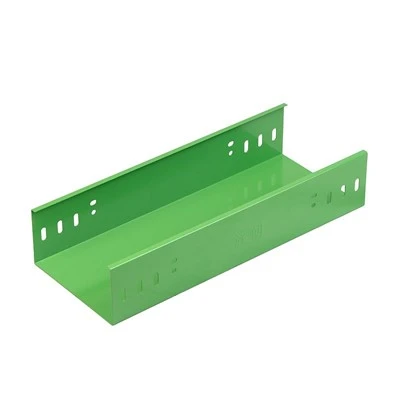
Next up: pick the right tray type for your space. Old industrial trays were almost always solid steel, but that’s not your only option anymore. Let’s be real—solid steel is heavy, prone to rust, and traps heat, which is bad for sensitive data cables. I push my clients to look at ventilated cable trays first, especially if they have a lot of high-speed data or power cables that run hot. The gaps in ventilated trays let heat escape, so you don’t have to worry about cables overheating and failing. For corrosive environments—chemical plants, food and beverage facilities, coastal factories—powder-coated steel or aluminum trays? No, wait, even better: stainless steel or hot-dipped galvanized (HDG) with a thicker coating. I had a brewery client a few years back; their old tray was raw steel, and after a year, beer spillage ate through it. Switched to HDG ventilated trays, and three years later, zero rust issues. And if you’re dealing with a retrofit where you can’t shut down the whole plant? Modular trays are your BFF. They snap together without welding, so you can replace sections one at a time during off-hours, no full shutdown needed. A lot of my clients used to think all trays are the same, but trust me—when you pick the wrong material, you’re right back here in 5 years fixing another mess.
Now, the supports. This is where most people cut corners, and it bites them. Old hangers might be rotted wooden blocks or thin steel L-brackets that can’t handle new tray weight. Let’s start with hanger spacing: follow the National Electrical Code (NEC) guidelines, but wait—NEC says for steel trays, spans every 5-8 feet, but modern high-strength trays can handle up to 10 feet, so adjust that to cut costs. If your existing supports are concrete beams, make sure the new hangers are bolted into the beams, not just resting on them. I had a client who used old nail-on hangers on concrete—after a year, a worker bumped the tray, and the hanger pulled right off the beam. Oops. If you’ve got steel structural supports, go with heavy-duty angle brackets instead of the thin ones you can pick up at a hardware store. Also, add vibration dampeners if your factory has lots of heavy machinery. Those little rubber pads under hangers stop the tray from rattling loose, which is a big one for long-term reliability. I always tell my clients: spend a little extra on quality supports, and you won’t be re-tightening bolts every 6 months.
Then there’s cable management, which is half the upgrade. Old trays usually just have cables dumped in, no organization, so you can’t access them when something goes wrong. That’s a nightmare for downtime. When you upgrade, use cable ties that are rated for industrial use—no cheap grocery store ties here, they break in heat or cold. Or even better, cable lugs and run spacers, so cables are separated. Power cables and data cables? They need space between them to prevent interference—like 6 inches, minimum. I once had a plant manager run new 10G Ethernet next to 480V power cables, and the signal was so bad the sensors kept glitching. We split them into separate tray sections, and problem solved. Also, label every cable as you install—tape with the cable number, where it goes, what it’s for. That sounds small, but when a cable fails at 2 a.m., you don’t want to spend 2 hours tracing it through a messy tray. One client of mine started labeling their cables after their last outage; they fixed a fault in 20 minutes instead of 2 hours. Game changer.
Wait, what about compliance? You can’t just throw up a new tray and call it good. A lot of old systems were installed before the latest NEC updates, especially for fire safety. Ventilated trays can have fire-resistant coatings if you’re in a facility with strict fire codes. Also, some local codes require that cable trays are grounded properly—static electricity can damage sensitive electronics, so make sure every section of your new tray is bonded to the ground wire. I always remind clients to check local codes before starting; I’ve had a few who skipped that and had inspectors force them to redo half the job. Don’t be that guy.
Now, let’s talk about the budget side, because I know that’s a big concern. Upgrading can seem expensive, but it’s way cheaper than downtime or replacing the whole system in 5 years. Let’s do the math: the average plant loses like $10,000 an hour in downtime, right? If your old tray causes a 10-hour outage, that’s $100k. A tray upgrade that costs $30k will pay for itself in one outage. Also, don’t try to do everything at once if cash is tight. Prioritize the worst sections first—the ones with the most corrosion, the most packed cables, or where you’re adding new equipment. Upgrade those in phases, so you don’t have to shut down the whole plant at once. I have a client who did their upgrade in 3 phases over a year, spread the cost out, and never had a full shutdown. Worked like a charm.
Wait, let’s address a common myth: “I can just add a few extensions to my old tray.” No. Old trays are made of thinner steel, so adding weight from new cables can bend them, sag, and pull supports loose. I’ve seen trays sag so much they were touching equipment below, causing short circuits. Don’t do that. A proper upgrade is replacing the tray entirely (or the bad sections) with a modern one that’s built for today’s cable loads.
Now, if you’re reading this and thinking, “This sounds like too much work,” let me be clear—this is where we come in. We’re industrial cable tray suppliers, not just people who sell stuff. We’ve helped hundreds of plants do upgrades like this, from small warehouses to big manufacturing facilities. We’ll do the audit with you, help pick the right tray and supports, even connect you with installation teams that know how to work around plant schedules so you don’t lose production time. No guesswork, no wasted money, just a system that works for the next 15 years, not the next 5.
Let me wrap this up: upgrading your old industrial cable tray system isn’t just about a new product—it’s about making your plant safer, more reliable, and cheaper to run. Do the audit first, pick the right material for your environment, invest in good supports, organize your cables, follow codes, and take it in phases if you need to. Skip the band-aid fixes, and you’ll thank me later when you don’t have mid-night outages or rusted trays falling apart.

If you’re ready to stop dealing with your old tray and get a quote, or just want to chat through what you need, reach out to our team today. We’re here to make this upgrade as smooth as possible, no nonsense, no hidden fees.
Cable Tray Systems References:
- National Electrical Code (NEC) Article 318, Cable Trays
- Industrial Communication Technology Foundation (ICTF) Guidelines for Cable Management
- Corrosion Resistance Handbook for Industrial Structural Materials, 2022 Edition
- U.S. Occupational Safety and Health Administration (OSHA) Guidelines for Electrical System Safety in Manufacturing Facilities
- Industrial Plant Maintenance Association (IPMA) Report on Cable System Downtime Costs, 2023
Hebei Jinglang Industrial Co., Ltd.
As one of the most professional industrial cable tray manufacturers and suppliers in China, we also support customized service. We warmly welcome you to wholesale high quality industrial cable tray in stock here from our factory. If you have any enquiry about quotation, please feel free to email us.
Address: Nanxinzhuang Village, Daweihe Hui and Manchu Township, Wen’an County, Langfang City, Hebei Province
E-mail: 18231629992@163.com
WebSite: https://www.jinglangcabletray.com/
