Yo, let’s cut to the chase—if you’ve ever driven a snowy mountain pass and seen those weird, slatted fences along the side, you might’ve thought, “Why not just build a regular wall?” Spoiler: snow fences aren’t one-size-fits-all, and as a snow fence supplier who’s been obsessing over this stuff for years, I can tell you that getting the design right is the difference between a fence that actually works and one that just turns into a giant snow pile for no reason. Snow Fence

First off, let’s talk wind. Snow moves with wind, not just gravity—this isn’t like leaves falling. The #1 thing we nail with our designs is matching the fence’s specs to the site’s wind patterns, because if you skip that, you’re wasting your money. Let’s say you’re putting a fence along a rural highway in Wyoming, where gusts hit 60 mph+ all winter. A tall fence here’s non-negotiable—short stuff just gets snow blown right over, no catching it. But wait, if you’re dealing with a small backyard for a ski slope access path in Vermont, you don’t need a 10-foot monster—you can go 4 or 5 feet, tops. I’ve seen customers come to us with a 2-foot fence for a mountain pass, and it’s just sad—three days later, snow’s piling up on the other side, and the fence’s buried under a foot of it.
Then there’s the porosity. That’s just a fancy word for how much air can pass through the fence, right? If a fence is 100% solid, wind slams into it, shoots upward, and dumps a huge snowdrift right at the base—total opposite of what you want. If it’s way too open—like a chain-link fence with barely any gaps—snow just blows through. We test our fences at our warehouse with a tiny wind tunnel (don’t laugh, it’s cheap) and land at a 30-40% porosity sweet spot. That’s the magic number where wind slows down, drops its snow, and doesn’t make a giant drift at the bottom. I had a customer last year who tried a homemade fence with 60% gaps, and when we measured, it only caught 15% of the snow a properly porous one would—total flop.
Next, ground conditions. You can’t just stick a fence in the dirt and hope it stays. If you’re on soft, snowy ground like a recent snowbank, you need shorter posts buried deeper—like 2 feet deep for a 6-foot fence. But if you’re on frozen rock or a paved area, you need heavier, stronger posts, maybe even concrete footings, because wind can lift that whole thing up. We make post kits for both—one with thicker steel for hard ground, one with angled bases for soft snow. Pro tip: if you’re on a slope, don’t line the fence straight up the hill. Angle it slightly downhill—snow drifts better when the fence’s sloped to catch the wind, not fight it. I learned that the hard way when I installed a test fence on my cousin’s ski hill a few years back; it was straight, and the wind pushed snow over the top instead of into the drift zone.
Wait, don’t forget snow load. That’s how much snow the fence itself has to hold. If you’re in an area that gets 5 feet of snow in a week, your fence slats and posts can’t flimsy—they’ll bend or break under all that weight. We use thicker steel for our heavy-duty lines, and even add reinforcement rods between posts for super snowy spots. Our lighter residential fences work fine for 2-3 foot snow dumps, but if you’re in the Rockies, skip the cheap stuff—you’ll be replacing it every spring.
Also, the space between the fence and the area you want to protect. Let’s say you’re protecting a driveway or a building—you can’t put the fence right up against it. The rule of thumb is, the drift from the fence will be 10-15 times the fence’s height, so if your fence is 8 feet tall, the drift will be 80-120 feet downwind. So put the fence 90-100 feet away from the thing you’re protecting, not right next to it. I’ve had a few clients who did that wrong—they put a fence 10 feet from their barn, and the drift buried the side door. Oops.
What about maintenance? A lot of people don’t think about this when buying. If your fence is all plastic slats, it might break in UV sun if it’s sitting all summer, or get brittle in cold weather. Our fences are made with galvanized steel slats—they don’t rust, don’t break, and last 10+ years. The posts? They’re powder-coated so they don’t chip from ice or snow plows. I once had a customer who bought a cheap plastic fence from a big box store; by the second winter, the plastic was cracked, and half the slats were gone. We replaced it with our galvanized stuff, and 5 years later, it’s still holding strong.
Oh, and there’s a weird one I’ve learned lately: wildlife. If your fence is along a trail or a ranch, deer might try to jump it, but if it’s too tall, they can’t, and they’ll go around, digging holes in your fence. We make our ranch-specific fences with a lower section that’s less dense, so deer can jump it easy, but the upper section is tight, so wind can’t get through. That way, you’re not fixing broken posts every week from deer ramming the fence.
Now, let’s talk about common mistakes. Number one: buying the wrong height. I can’t tell you how many times someone comes in, says “I need a fence for my highway, but it’s just a little stretch”—no, the wind doesn’t care about “little stretches.” Number two: porosity off. Either too much, too little. Number three: bad post installation. A fence is only as strong as its posts. If you skip burying them deep, they’ll wobble, and the whole thing will collapse in a gust. We always tell customers to use a post hole digger, not a shovel—shallow posts = sad fence.
So, if you’re looking for a snow fence, don’t just pick the cheapest one. Talk to someone who actually works with snow fences all the time, not some random hardware store guy. We can help you pick the right height, porosity, post kit, and placement based on where you are. Whether you’re a highway department needing to keep roads clear, a ski resort protecting a chairlift, or a homeowner keeping your driveway snow-free, we’ve got the stuff.
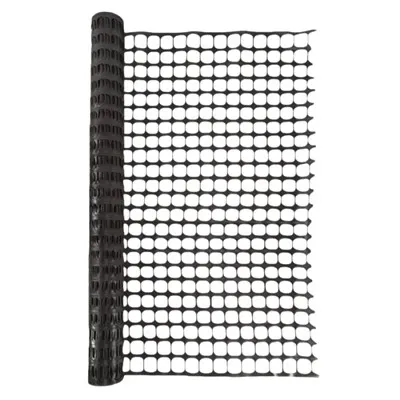
If you’re ready to stop dealing with lousy, useless snow fences and get something that actually works, hit us up to chat—we’ll go over your site, your needs, and hook you up with the right solution. No jargon, no pushy sales, just real advice from people who live and breathe snow fences.
Plastic Black Garden Fence References:
- Colorado Department of Transportation. (2021). Snow Fence Design Guidelines for Mountainous Highways.
- International Association of Snow and Ice Engineers. (2019). Porosity and Drift Formation in Snow Fences.
- USDA Forest Service. (2020). Installing Snow Fences for Watershed and Recreation Area Management.
- Snow Fence Manufacturers Institute. (2022). Material Durability and Maintenance Best Practices for Cold Climates.
Shaoxing Yongte Plastics Co., Ltd.
We are one of the most reliable snow fence manufacturers and suppliers in China, specialized in providing high quality customized products. We warmly welcome you to wholesale discount snow fence for sale here from our factory. Contact us for pricelist and free sample.
Address: INDUSTRIAL PARK, LIZHU TOWN, KEQIAO DISTRICT, SHAOXING CITY, ZHEJIANG PROVINCE
E-mail: support@sxxyongte.com.cn
WebSite: https://www.fenceplastic.com/
