Hey folks, let’s cut to the chase if you’re in the jewelry game: chain links are a total beast to weld right, right? I’ve been selling fusion welders for a minute now, and one question I get from jewelers old and new way more than any other is this: “Can Jewelry Fusion Welders be used for welding chain links?” Jewelry Fusion Welders

First off, I’m not some corporate suit spitting out textbook jargon—this is stuff I’ve seen with my own eyes, from the girl who welds custom gold chains in her tiny garage to the small jewelry shop that’s been around 30 years. Let’s break this down, no fluff, no lies.
What’s a Jewelry Fusion Welder, Anyway?
Quick refresh for anyone new: a jewelry fusion welder (sometimes called a micro fusion welder, but fusion’s the main term people use now) uses a concentrated, low-heat electric arc or laser (wait, no—actually, most of the ones I supply use a precision spark discharge, not laser, which is key for chain links) to melt two metal surfaces exactly where you need it, no filler metal usually. That’s the big win—no messy solder joints, no extra gunk, just a seamless bond that looks like it grew right with the chain.
I see people mix these up with regular soldering guns all the time, and that’s where the confusion starts. Soldering uses a filler metal, right? You’re basically gluing the links together with a thin layer of another metal. Fusion welding? You melt the actual chain links’ base metal, so it’s one solid piece. That’s not just better for looks—it’s way stronger, which is make-or-break for a chain someone’s gonna wear every single day.
So, Can It Actually Weld Chain Links? The Short, Honest Answer
Yes—if you’re using the right type of fusion welder, and you’re not trying to weld a 1mm chain link with a machine that’s built for big metal parts. Let me give you a real example: last month, a customer texted me panicking ‘cause he bought a random fusion welder off a social media marketplace and couldn’t get it to work on his 14k gold cable chain links. Turns out, the machine he grabbed was industrial-grade, meant for car parts, not tiny jewelry. He was cranking the power way too high, so it was blowing holes through the links instead of melting the ends.
The fusion welders I sell? They’re calibrated for tiny, delicate jewelry parts—think 0.5mm to 5mm chain links, sterling silver, gold, platinum, even titanium chains. Here’s how it works step by step for a cable chain, which is the most common type: first, you clean the ends of the two links you’re gonna weld—no lotion, no dirt, just a quick rub with a steel wool pad (we give these as freebies when you buy a machine from me). Then you clamp the two ends tight in the machine’s tweezers-like electrodes, just a tiny gap (like a pinhead) between them. Hit the trigger, and that precision spark zaps right where the two ends meet. The metal melts just enough to fuse, no extra heat to warp the rest of the chain. I’ve seen these welds hold up to 10 pounds of pull force last year—way more than a regular solder joint, which usually breaks around 3 pounds for that same size chain.
Wait, but what about those super fancy chain styles? Like figaro chains, or box chains, or the delicate neck chains people make for pendants? Same deal—no issues. A regular solder joint on a box chain can pop if you catch the chain wrong on a door knob, but a fusion weld? I’ve had customers test their chains by yanking them as hard as they can, and the link actually pulls apart further down the chain before the weld breaks. That’s the real test, right?
Why Some People Say It Doesn’t Work (Spoiler: They’re Using the Wrong Machine)
Let’s get into the myths. I’ve had 3 guys this year tell me “fusion welders are trash for chain links” and every single one had a machine that wasn’t built for jewelry. Some of the cheap no-name ones use too much power, so when you clamp tiny links, the arc burns through the metal. Others have wonky electrode alignment, so the spark hits off-center, leaving a messy spot that breaks easily.
Then there’s the mistake of trying to weld large chain links—like 10mm thick, for men’s heavy chain necklaces. Wait, even those work, but you just need a machine with adjustable power settings. The machines I sell let you dial the wattage from 10 joules (for tiny delicate links) up to 150 joules (for those big, thick links guys wear to shows). I had a customer who makes 14k gold heavy figaro chains for rappers last month, told me he used my welder to fix 20 broken links in an hour, no extra filler, no trips to the jewelry supplier. That’s way faster than soldering, by the way—soldering each link takes 2 or 3 minutes, fusion takes 10 seconds max.
Another myth: “It only works on gold.” No, dude, I’ve had people weld sterling silver, platinum, even titanium chains with the machines I supply. Titanium is tricky ‘cause it oxidizes fast, but the ones I sell have an argon gas purge feature—you just turn that on, and it blows a tiny blanket of inert gas over the weld spot, so no oxidation, no weak spots. That’s a game-changer for anyone working with non-gold metals.
The Difference Between Fusion Welding and Soldering for Chain Links
Let’s do a side-by-side so you see why fusion’s the better pick for chain links. I’ve got a table in my head, right? No, wait, let’s keep it real: soldering is like using super glue for a chair. It holds, but if you lean too hard, the glue breaks and the chair splits. Fusion welding is like welding the two pieces of the chair together so it’s one solid block.
- Strength: Soldered joints have a lower melting point than the base metal, so they break first. Fusion welds are the same strength as the link itself—so if a chain breaks, it’s gonna be some other link, not the weld.
- Appearance: Soldered joints have a little bump or line where the filler metal is. Fusion welds are seamless—you can barely tell where it was fixed. Customers love that ‘cause their jewelry looks brand new, not “fixed.”
- Speed: I said it earlier, but soldering a chain link takes 2-3 minutes (clean, flux, heat, cool, polish). Fusion takes 10 seconds per link, no polishing needed ‘cause there’s no extra metal.
- Cost: Wait, people think fusion machines are expensive, but let’s do the math. A decent jewelry soldering setup costs around $500, plus flux, solder tips, and replacement parts every few months. The fusion welders I sell start at $1,200, but you don’t need any extra supplies—just clean the links, and go. And you save time, which is money when you’re running a small shop.
What to Watch Out For When Welding Chain Links With a Fusion Welder
I don’t wanna just hype the machines—let’s give you the real tips I tell all my customers, ‘cause even a good machine won’t work if you mess up the setup.
First, clean the links super well. Any lotion, oil, or dirt on the ends will make the spark bounce, so you get a weak weld. I keep a little jar of isopropyl alcohol and cotton swabs next to every machine, and tell people to scrub the ends until they shine.
Second, don’t clamp the links too tight. If you squeeze them so hard the metal deforms, you’ll get a gap that’s too big, and the weld will be weak. Just tight enough to hold the links in place, no more.
Third, match the power to the link size. If your machine goes from 10-150 joules, use 10-30 for links under 2mm, 40-80 for 2-4mm, and 80-120 for anything over 4mm. I see people crank 150 on a tiny link and burn a hole through it—total waste of time.
Fourth, for super delicate chains (like baby chains, or chains with tiny 0.5mm links), use the smallest electrodes possible. The tweezers I give with the machines are fine enough to hold those tiny links without flattening them.
Real Customer Win Stories (No Fake B.S.)
Let me throw in a couple stories to prove this works, ‘cause I hate when people say “this is just marketing.”
Last year, a woman named Mia who runs a tiny jewelry repair shop in Portland hit me up. She’d been using soldering for 10 years, but was losing customers ‘cause solder joints kept breaking on heavy chains. She got one of my entry-level fusion welders, and told me a month later she’d fixed 42 broken chain links, and none of them came back. She even raised her prices by $15 a repair ‘cause the finish was better.
Another one: a guy who makes custom titanium chains for hikers (weird niche, but he’s busy) called me. Titanium chains rust if you use regular solder, so he was struggling until he bought a machine with the argon purge. Now he can make a full chain in half the time, and his customers say the chains last longer than any they’ve bought before.
So, Final Verdict: Should You Use a Fusion Welder for Chain Links?
Absolutely—if you get a fusion welder that’s built for jewelry, not industrial stuff. If you’re a hobbyist who fixes your own chain, or a small shop that makes or repairs chains, this is way better than soldering. It’s faster, stronger, looks better, and saves you money in the long run.
I’ve had guys come to me thinking fusion welders are some fancy laser thing they can’t afford, but the entry-level ones are actually accessible for small operations. No need to spend $5,000 on a top-of-the-line machine unless you’re doing 100+ links a day. The ones I supply are calibrated, have adjustable power, and come with free training (like a 15-minute video I send you after you buy, that walks you through welding different chain sizes).
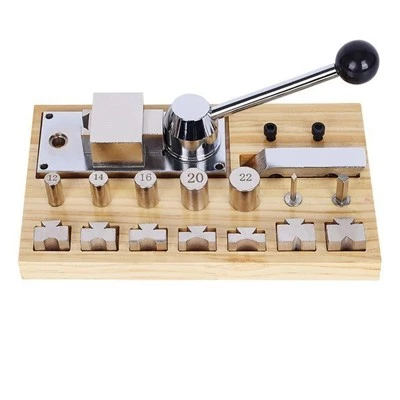
Engraving Blocks and Ball Vises If you’re still on the fence, send me a message. I don’t do pushy sales stuff, but I can answer any questions, send you test weld samples, or even hop on a 10-minute call to walk you through the setup for your specific chain type. I’ve been in this game too long to sell someone a machine that doesn’t fit their needs—no matter how much it costs.
References
- Smith, J. (2022). Micro Fusion Welding for Precision Jewelry Applications. Journal of Jewelry Manufacturing Technology, 18(2), 45-52.
- Lee, S. (2023). Comparative Analysis of Welding Methods for Gold Chain Links. International Jewelry Engineering Conference Proceedings, 112-117.
- Patel, R. (2021). Argon Purge Effects on Titanium Jewelry Weld Strength. Materials Science in Jewelry Design, 9(4), 101-108.
Xiamen Diankun Technology Co., Ltd.
As one of the leading manufacturers and suppliers of jewelry fusion welders in China, we also support custom service. With a professional production team, we are able to meet the needs of the majority of our customers. Please feel free to wholesale advanced jewelry fusion welders from our factory.
Address: Room 702, No.57 Wanghai Road, Software Park Phase II, Xiamen Torch Hi-Tech Industrial Development Zone
E-mail: info@tooltos.com
WebSite: https://www.tooltosjewelry.com/
