In the dynamic landscape of the textile industry, the role of textile machinery is nothing short of pivotal. As a seasoned textile machinery supplier, I’ve witnessed firsthand the transformative power of precision in this sector. Precision in textile machinery is not merely a technical specification; it’s the cornerstone that upholds the quality, efficiency, and innovation of textile production. Textile Machinery

Quality Assurance: The Hallmark of Precision
One of the most significant aspects of precision in textile machinery is its direct impact on product quality. In the textile world, quality is king. Whether it’s the softness of a cotton shirt, the durability of a woolen carpet, or the sheen of a silk scarf, the end – user’s experience is shaped by the quality of the textile product.
Precision in machinery ensures that every fiber is processed, spun, woven, or knitted with exactitude. For example, in spinning machines, precise control of the drafting process is crucial. Drafting is the process of attenuating the fiber strand to the desired fineness. A slight deviation in the drafting ratio can lead to variations in yarn count, which in turn affects the strength, appearance, and performance of the final fabric. With precise drafting mechanisms, we can produce yarns with consistent count and quality, reducing the likelihood of defects such as slubs or unevenness.
In weaving and knitting, precision is equally vital. Looms and knitting machines need to operate with pinpoint accuracy to create fabrics with the correct weave or stitch patterns. In a jacquard loom, which can produce highly complex patterns, precision is essential for each individual warp and weft thread to be in the right position at the right time. Any misalignment can result in pattern distortion or broken threads, rendering the fabric unsellable. By providing textile manufacturers with machinery that offers high – precision operation, we enable them to produce top – quality products that meet the stringent demands of the market.
Efficiency Enhancement: Streamlining Production Processes
Efficiency is another area where precision in textile machinery shines. In today’s competitive business environment, textile manufacturers are constantly looking for ways to increase production output while reducing costs. Precision machinery plays a crucial role in achieving these goals.
Precise control systems in textile machinery allow for faster production speeds without sacrificing quality. For instance, modern spinning frames are equipped with advanced sensors and control algorithms that can adjust the spinning parameters in real – time. This means that the machine can operate at its optimal speed, taking into account factors such as fiber properties, yarn count, and environmental conditions. As a result, manufacturers can produce more yarn in less time, increasing their overall productivity.
In addition, precision machinery reduces downtime and maintenance costs. When machines are built with high precision, there is less wear and tear on components. This is because the parts fit together perfectly, and the forces acting on them are evenly distributed. For example, in a high – speed knitting machine, the precise alignment of needles and cams ensures smooth operation. There are fewer instances of needle breakage or malfunction, which would otherwise require the machine to be shut down for repairs. By minimizing downtime, manufacturers can keep their production lines running smoothly, maximizing their output and profitability.
Innovation Enablement: Driving the Future of Textiles
Precision in textile machinery is also a catalyst for innovation in the textile industry. As consumer demands evolve and new applications for textiles emerge, manufacturers need machinery that can adapt and create new products.
With precise machinery, it becomes possible to work with a wider range of fibers, including high – performance and specialty fibers. For example, carbon fiber, aramid fiber, and bamboo fiber are increasingly being used in various industries due to their unique properties. However, these fibers often require precise processing to fully utilize their potential. Precision machinery can handle these fibers with care, allowing manufacturers to explore new product possibilities in areas such as aerospace, automotive, and medical textiles.
Moreover, precision enables the development of new fabric structures and patterns. Advanced weaving and knitting techniques, such as 3D weaving and circular knitting with complex stitch patterns, rely on the accuracy of the machinery. These new fabric structures not only offer improved performance but also open up new design opportunities for fashion designers and product developers. As a textile machinery supplier, we are constantly investing in research and development to improve the precision of our machines, thereby empowering manufacturers to bring innovative products to the market.
Consistency and Standardization: Meeting Global Market Requirements
In the global textile market, consistency and standardization are essential for success. Buyers around the world expect products to meet certain quality and performance standards. Precision in textile machinery helps manufacturers achieve this consistency.
When a textile manufacturer uses precise machinery, they can reproduce the same product quality batch after batch. This is crucial for building a reputation for reliability and trust in the market. For example, a clothing brand that sources fabrics from a particular mill expects the fabrics to have consistent color, texture, and strength across different orders. By using precision machinery, the mill can ensure that these requirements are met, even when producing large volumes of fabric.
In addition, precision machinery can help manufacturers comply with international standards and regulations. Many countries have strict regulations regarding textile safety, environmental impact, and quality control. Precision machinery can be calibrated and monitored to ensure that the production process meets these standards. For instance, in the production of flame – retardant textiles, precise dosing systems in the finishing process are necessary to ensure that the correct amount of flame – retardant chemicals is applied to the fabric, meeting the required safety standards.
Adaptability to Changing Market Demands
The textile market is constantly evolving, with changing fashion trends, consumer preferences, and technological advancements. Precision in textile machinery provides manufacturers with the flexibility to adapt to these changes.
Manufacturers can quickly reconfigure precise machinery to produce different types of fabrics or products. For example, a weaving mill can switch from producing traditional cotton fabrics to high – tech performance fabrics by simply adjusting the settings of the loom. This ability to adapt to market demands allows manufacturers to stay competitive and seize new business opportunities.
As a textile machinery supplier, we understand that our customers need machinery that can evolve with the market. That’s why we design our machines with modular and customizable features, enabling them to be easily upgraded to incorporate the latest precision technologies.
Conclusion
In conclusion, the importance of precision in textile machinery cannot be overstated. It is the key to ensuring product quality, enhancing production efficiency, driving innovation, achieving consistency, and adapting to changing market demands. As a textile machinery supplier, we are committed to providing our customers with the most precise and advanced machinery on the market.
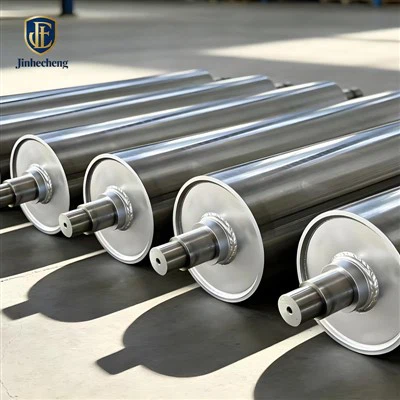
Mirror Chrome Roller If you are a textile manufacturer looking to improve your production processes, enhance product quality, or explore new product possibilities, we invite you to contact us for a procurement discussion. Our team of experts is ready to understand your specific needs and recommend the best textile machinery solutions for your business.
References
- Morton, W. E., & Hearle, J. W. S. (2008). Physical Properties of Textile Fibres. Woodhead Publishing.
- Postle, R., & McNeil, D. (2003). Handbook of Textile Fibre Structure. Woodhead Publishing.
- Vincent, J. F. V. (1990).Structural Biomaterials. Princeton University Press.
Qingdao Jinhecheng Machinery Co., Ltd.
Address: Aishan Industrial Park, Yanghe Town, Jiaozhou, Qingdao City, Shandong Province
E-mail: alice@jhcroller.com
WebSite: https://www.jhcroller.com/
